Frontend analysis for FlexiForward
We are making an overview analysis about incorporate the new FlexiForward product into the Ebury frontend pipeline. Understand that this analysis is based on the decision of FlexiForward RFC where the FlexiForward will be a type of ForwardDeal model.
We dont think the new_deal page is able to accept more products, so maybe this product should be considered the last one to get into the now already quite complex workflow. Please pay attention to the alternatives section.
Problem Description
BOS's new_deal page includes a lot off different product types in the same
view, so we want to do the changes with the least affection to other products's
workflows. Both backend view and frontend scripts follow their own pipelines in
order to produce the required trade.
Along with the change in the new_deal page, we also need to do small changes
on some other pages in the rest of the frontend to include the new product
type. Understand that this RFC will not cover all changes needed to include the
new product all around the whole system.
Background
Reuse the new_deal page to include the new product type FlexiForward and
update the rest of the BOS's frontend to correctly display the new product.
Solutions
new_deal
-
BACKEND
-
FlexiForward, trade type
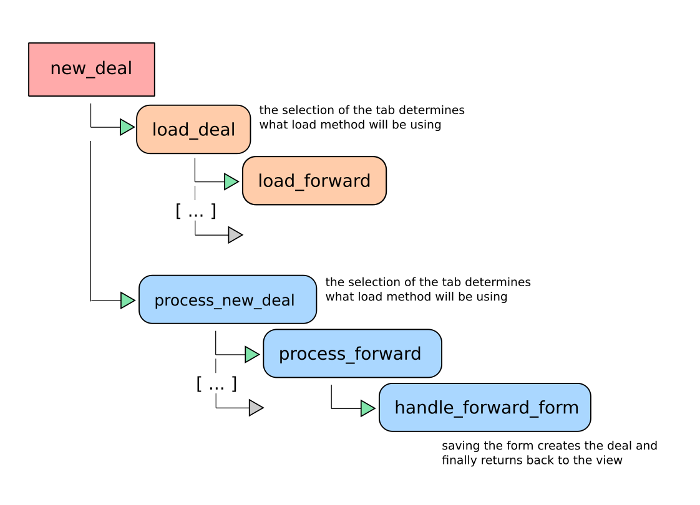
In the current new_deal backend the flow is a bit long but its reusing most of the parts for the two forward types. It could be more or less easy to insert the specifications of the
FlexiForwardnew type into this workflow without too much hassle and without breaking the previous forward types. Understand that this current flow is a bit fragile because of all the different things we have added over the years. So I recomend a lot of manual tests for the rest of forward types for any change in the new_deal.Most of the times the distinction between fixed and window forwards are made with if statements like so:
python
if request.POST.get('type', '') == "fixed":
    logger.info("Handling fixed forward in posting")
    context['initial_tab'] = TABS_NUMBER['fixed']
Or like so when we are inside the forms:
python
if fwd_form.cleaned_data['type'] == "window":
    bd.broker_contract_type = "windowforward"
else:
    bd.broker_contract_type = "fixedforward"
if fwd_form.cleaned_data.get('is_cover_broker_deal'):
    bd.is_cover = True
So the if/else pattern is no longer valid so a deep code review must be done so we can correctly get all the different forward types and not assume.
-
Drawdowns for FlexiForward, trade type
The case for drawdowns in more difficult to tackle.
The flow in backend to create Drawdowns is similar to the forward but using different forms files.
The change is deeper tho because we have to include an accept rate functionality like we have in
SpotsDeal. Thatinitial_rateshould be applied to the new created SpotDeal and not the rate from the parent ForwardDeal. -
FRONTEND
-
FlexiForward, trade type
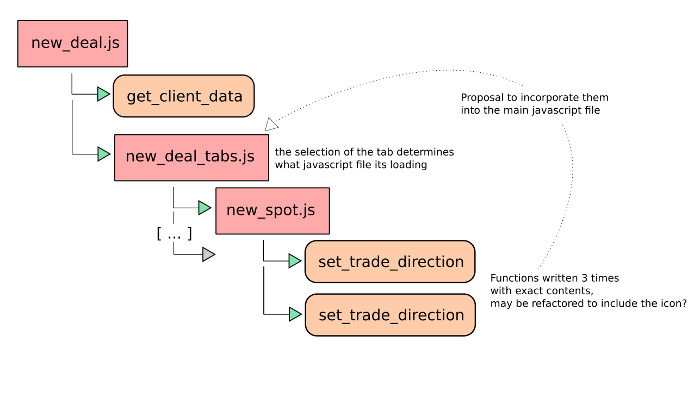
In the case of
new_dealfrontend is the same scenario, the flow is common for all types of deals and it depends on the type of product a different javascript file is used.At first it as product requirement it was considered that the best option was include FlexiForward product as a dropdown selector in the fixedforward tab.
- On one side, the FlexiForward is similar to Fixed because it can be contracted since day 0
- On the other side, is similar to window because it can have an indeterminate number of drawdowns. Moreover sales team is used to contract the FlexiForward deal using the windowforward tab and then composing the contracted product using other products.
That together with the fact that fixedforward tab has
Strip/OTC Forwardoption not needed in FlexiForward makes it stronger candidate so use the windowforward tab as the selected choice.Pay special attention to the backbone models defined in
new_deal_models.jsdepending on the type of model forFlexiForwardwe have up update it accordingly. since that backbone prototyping was created in a composable way maybe the changes are not big but that has to be looked at in detail.Found that there are some functions are duplicated in the different javascript end files, but they are exactly the same. I propose to have them all together in the same javascript file. (maybe
new_deal_tabs.jsor a new file with shared logic.)Again in the case of the frontend the flow for both forward types is common and should remain the same (if we use the
ForwardDealmodel). In the other case we have to create a new flow for that new trada type.Finally we have to pay special attention to the drawdowns dropdown table in the forward details or new drawdown view, because FlexiForward Drawdowns most of the times have different rates than the parent Forward. I sugest in this case to include the rate at Drawdown level and don't make any distinction for
FlexiForwardto other forwards, so its the same table for all three types of forwards. -
Drawdowns for FlexiForward
The flow in javascript for the Drawdowns is similar to the forward so again like in the backend part the concerns are the same.
Same decisions have to be made when updating the
new_deal_models.jsregarding the model prototype for Drawdowns for FlexiForward.Also again the functionality for the rate for new drawdowns when they are Drawdowns for FlexyForwards has to include all the logic to get and contract rates, also include that in the form so they are correctly populated in the model.
Trade Details Page
Since are using ForwardDeal as base class, then it would be very simple and
just use the existing forward_deal view.
Client Details Page
Include the new forward type in the trades search form
Include the flexi type in trade_type_tooltip
Make sure the add drawdown (option on the right), works ok with the new
FlexiForward and rest of forwards.
TradeLog
No change would be needed in the model, the tradelog has open string
description, but it would be necesary to take modify the tooltip in
trade_type_tooltip
Security Impact
One of the requirements in the epic, includes an specific permission group to
manage FlexiForward product, the idea about that is to be able to use it as
a switch to be able to deliver the new product in phases and not disturb the
normal Ebury's workflow.
As soon as the epic is considered correct for the whole sales department we will remove that constrain and leave it for the whole sales department.
There is no other security impact involved, because the rest of security conditions apply like all the rest of products.
Performance Impact
Not relevant, we can not foresee any performance issue other than requesting more tables when trying to retrieve an specific deal
Developer Impact
Please pay attention to all the times we are representing ForwardDeal
objects, until now we have a binary situation where the Forwards can be of only
two types and so in the code we are assuming that if its now an specific type
should be of the other.
Data Consumer Impact
None detected.
Alternatives
In the RFC we are using a fast way to develop the new product, but if we want
to be more ambitious we could have as an alternative a more products tab
where on click a modal window pops up and the operator can decide the type of
product they want to create.
The idea for that is to avoid reusing the new_deal view to add more products, because on the long term that will be contraproductive. It's better to have a more composable system where the flow is the same for all the products but the templates and final products are different.
Deployment
Already mentioned in security, this new product will be switched out by permission groups and no specific deployment will be needed other than the required database migration for that new permission group.
Dependencies
This RFC depended on TFT-1971 because its for the same product but about the modeling and backend perspective.